Hiding in plain batch: Inside the SAMA Multi-Stage XWorm Loader C2
Executive Summary
This analysis looks at a malicious archive, SAMA.zip, that delivers a multi-stage Windows infostealer/RAT. The lure is built around “SAMA Customer services” — SAMA being the acronym of the Saudi Central Bank — and both the payload naming and a Saudi-hosted command-and-control server point to a campaign aimed at Saudi users.
The archive follows a pattern that keeps coming back in modern crimeware: a legitimately signed binary, a side-loaded malicious DLL, and a huge obfuscated batch loader all shipped together. Each piece has a job. The signed executable gives the chain a trusted face, the DLL rides in on that trust through search-order hijacking, and the batch file carries the real payload — encrypted, encoded, and reassembled entirely at runtime so that almost nothing malicious is visible on disk.
When the chain runs it ends in fileless, in-memory execution of a VB.NET payload family the author branded “SAMA” / “SAMAClient101”, whose capabilities (screen and webcam capture, synthetic input, sockets, AES crypto, WMI/registry recon) line up with an infostealer / remote-access trojan. A crowdsourced Snort rule classified the live traffic as an XWorm-variant infostealer C2, beaconing to 130.94.59.139:7000/TCP, hosted in Saudi Arabia.
In this part we walk the three archive members and go deep on the batch loader, which turned out to be the most interesting component: a self-decoding, self-verifying, seven-module in-memory loader that the author internally calls “KARMO.”
Key Findings
- Signed
AdobeARM.exe(clean) + fake-MicrosoftSensApi.dll(malicious) = a classic DLL side-loading pair. - The ~933 KB
.batis a full file-less multi-stage loader that stores its own encrypted payloads inside itself and uses environment variables as a pointer table between stages. - Final payloads are VB.NET assemblies internally named
SAMA-Kbat.exe/SAMA-K2.exe(“SAMAClient101”), injected fileless into living-off-the-land processes. - C2:
130.94.59.139:7000/TCP(LightNode, ASN 154177, country SA); Snort labelled the traffic XWorm. - Persistence via HKCU Run keys and a hidden scheduled task, executed through the signed
conhost.exe --headlessLOLBin.
Sample Information (Archive)
| Field | Value |
|---|---|
| Filename | SAMA.zip |
| File type | ZIP archive (deflate) |
| Size | 2,183,399 bytes |
| MD5 | e7d8372fc39a1739692d9c9395e59eed |
| SHA-1 | 62c51e37214c9a1a61c7b7c3851170d243903061 |
| SHA-256 | 6745899253115a295a86554127264a1d76e24f4aa2d6f2879e7284b1538b53ad |
| First submission | 2026-09-09 12:32:59 UTC |
| Detections | 22 / 68 (VT) |
| Suggested label | trojan.draftor/alien |
The three members share build/submission timestamps clustered around 27 Aug – 9 Sep 2026, consistent with a single, freshly assembled campaign.
| Role | File | SHA-256 | Verdict |
|---|---|---|---|
| Trusted host | AdobeARM.exe | 69469a3b…b3eed | Clean / signed — do not block |
| Side-loaded DLL | SensApi.dll | 766fe987…268a | Malicious (21/71) |
| Loader | SAMA-Kbat_0909267uvr09-09.bat | 94407c72…2d73 | Malicious (5/63) |
The Delivery Chain at a Glance
Before we take the members apart individually, here is how they fit together when the archive is detonated as a whole:
1
2
3
4
5
6
7
SAMA.zip
├─ AdobeARM.exe (signed, clean) ──► side-loads SensApi.dll [DLL search-order hijack]
└─ SAMA-Kbat_….bat ──► reassembles PowerShell stages from itself
──► decrypts + verifies 7 embedded modules
──► runs them fileless in-memory
──► injects the VB.NET "SAMA" payload into LOLBins
──► beacon to 130.94.59.139:7000 (XWorm C2)
Two independent execution paths (the side-loading pair and the batch loader) converge on the same fileless .NET payload and the same persistence artifacts.
1. AdobeARM.exe — The Trusted Host
AdobeARM.exe is a genuine, Adobe-signed executable — the real Adobe Reader / Acrobat Manager updater, with an intact Authenticode chain. It is not malicious, and the whole point of including it is exactly that: it is a clean, widely-distributed binary that no reputation engine will flag.
Threat Intelligence (facts only)
| Field | Value |
|---|---|
| SHA-256 | 69469a3b807d8751966a3d6cd78f17c8b368a6760718805997e751e3ab2b3eed |
| MD5 | 89a8351928db28453ff500562ec1d059 |
| Type | PE32 EXE (GUI), 32-bit |
| Product | Adobe Reader and Acrobat Manager, v1.824.460.1180 |
| Signature | Signed & verified — Adobe Inc. (DigiCert Trusted G4 Code Signing), valid 2025-10-06 → 2027-10-05 |
| Detections | 0 / 70 (clean) |
| Sandbox verdict | Zenbox: CLEAN (99% confidence) |
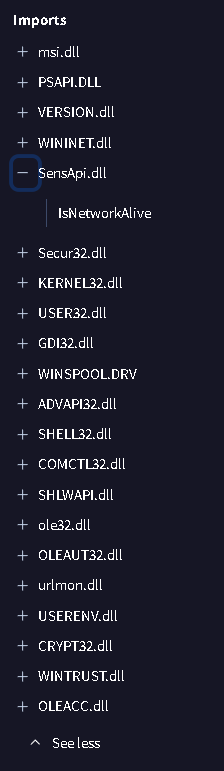
The trick lives in its import table: AdobeARM.exe legitimately imports IsNetworkAlive from SensApi.dll. When Windows resolves that import it searches the application’s own directory first, so an attacker-supplied SensApi.dll sitting next to the Adobe binary gets loaded in place of the real system DLL. Nothing in AdobeARM.exe is patched or tampered with — the binary is abused purely by placement.

Do not block this hash. AdobeARM.exe is a clean, legitimately-signed Adobe binary that exists on millions of endpoints. Detection must focus on where it loads SensApi.dll from, not on the executable itself.
We keep this section shallow on purpose — the loader is a trusted vehicle, not the malware. The interesting components are the next two.
2. SensApi.dll — The Side-Loaded Trojan
This is the DLL that AdobeARM.exe is tricked into loading. It impersonates the Microsoft “SENS Connectivity API DLL” — it carries fake Microsoft version metadata but is unsigned and is not a real Microsoft file. It exports the same three symbols as the genuine SensApi.dll (IsDestinationReachableA/W, IsNetworkAlive) so that the Adobe host resolves its imports cleanly and never notices the swap.
Malware Analysis
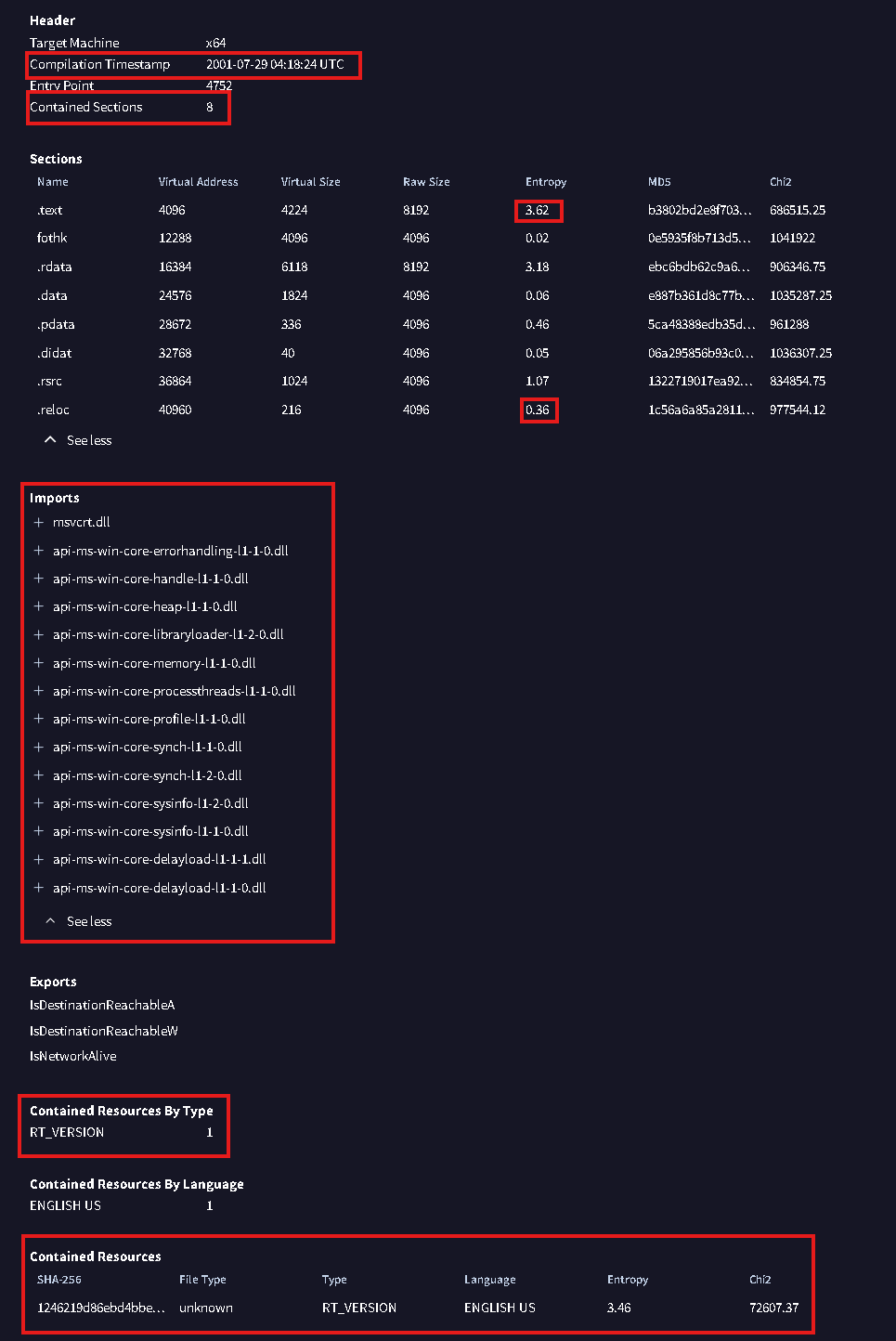
The genuine Microsoft SensApi.dll beside the attacker’s copy, note the 32-bit header, the 2026 compile stamp and the extra sections in the copy:
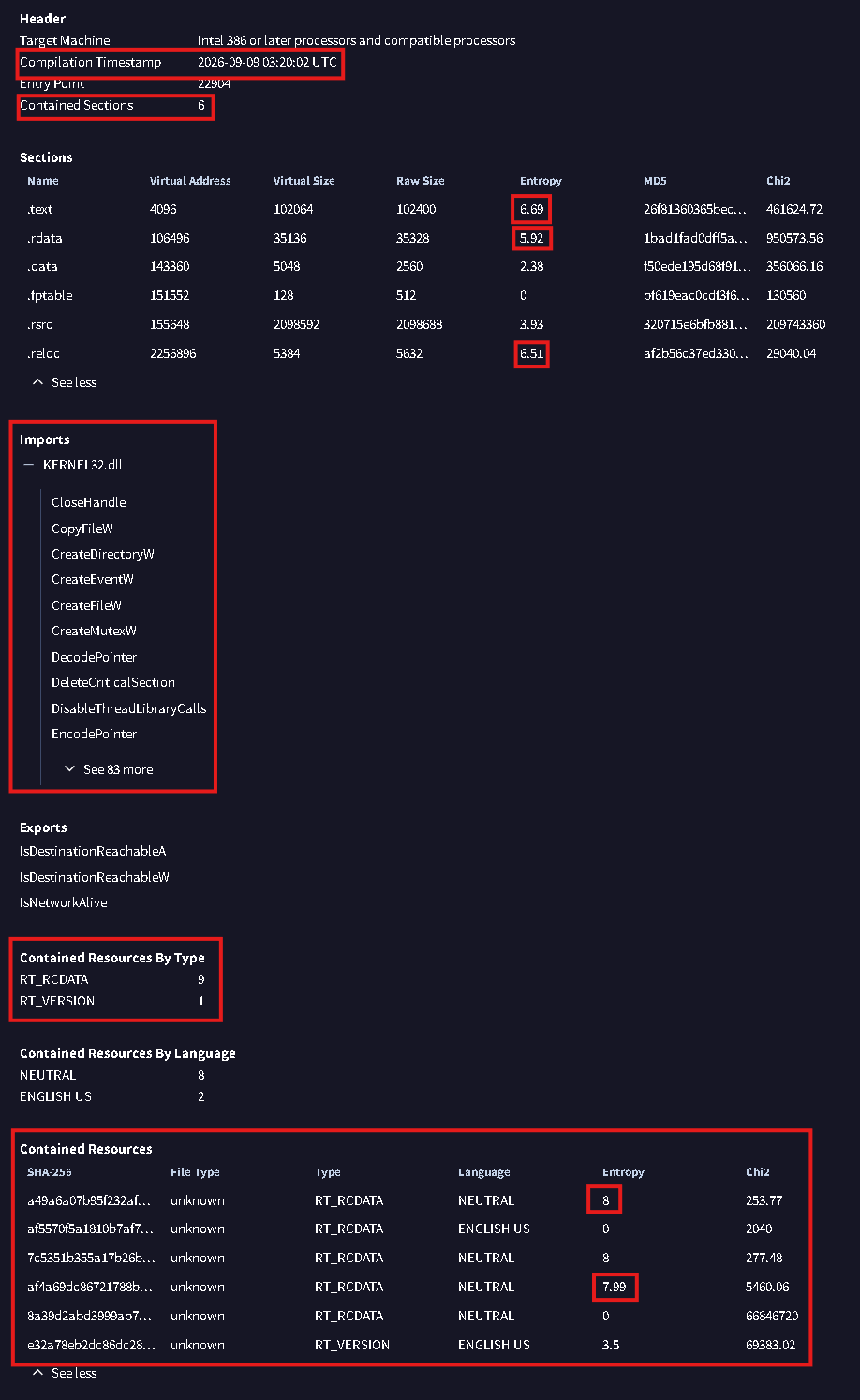
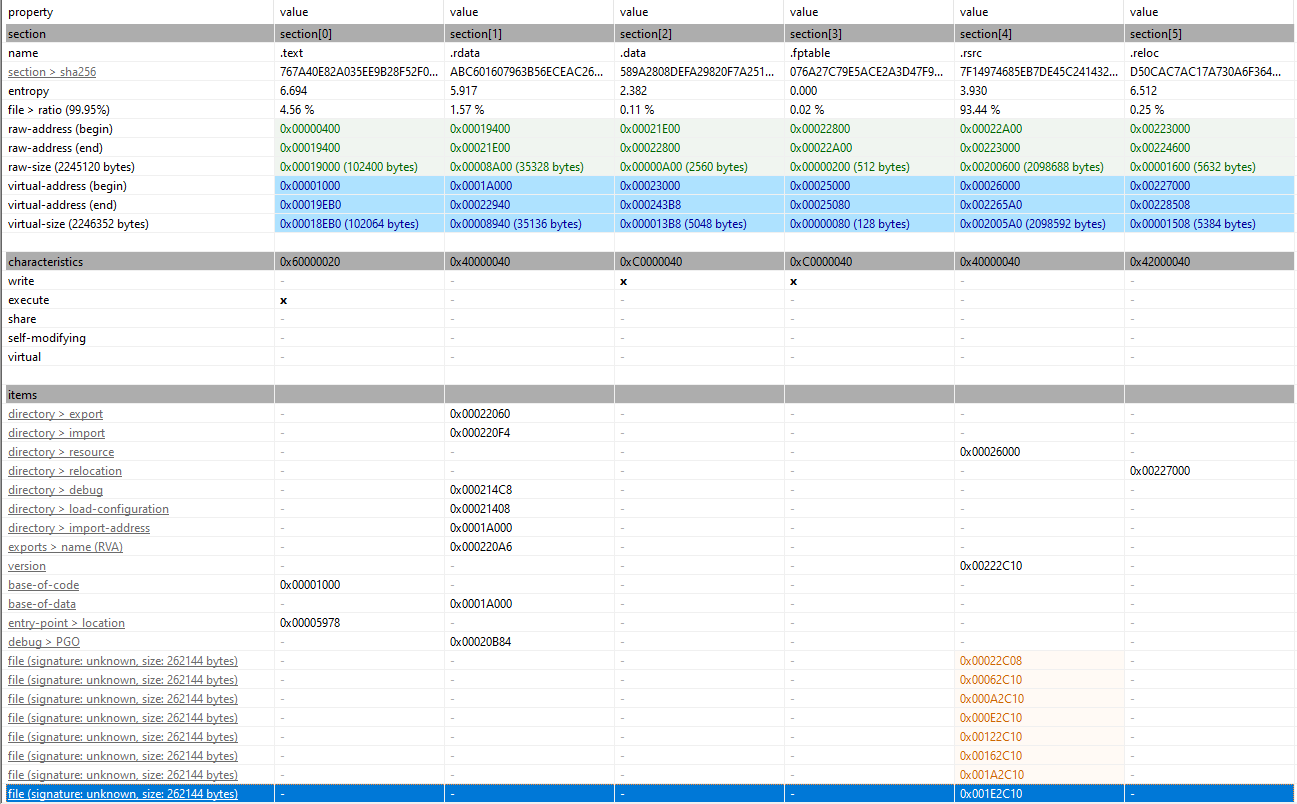
Section and resource layout — the non-standard .fptable section and roughly 2 MB of high-entropy RT_RCDATA split into 262,144-byte blobs:

Imports — 93 implicit KERNEL32.dll entries and nothing else; every other API is resolved by hand at runtime:

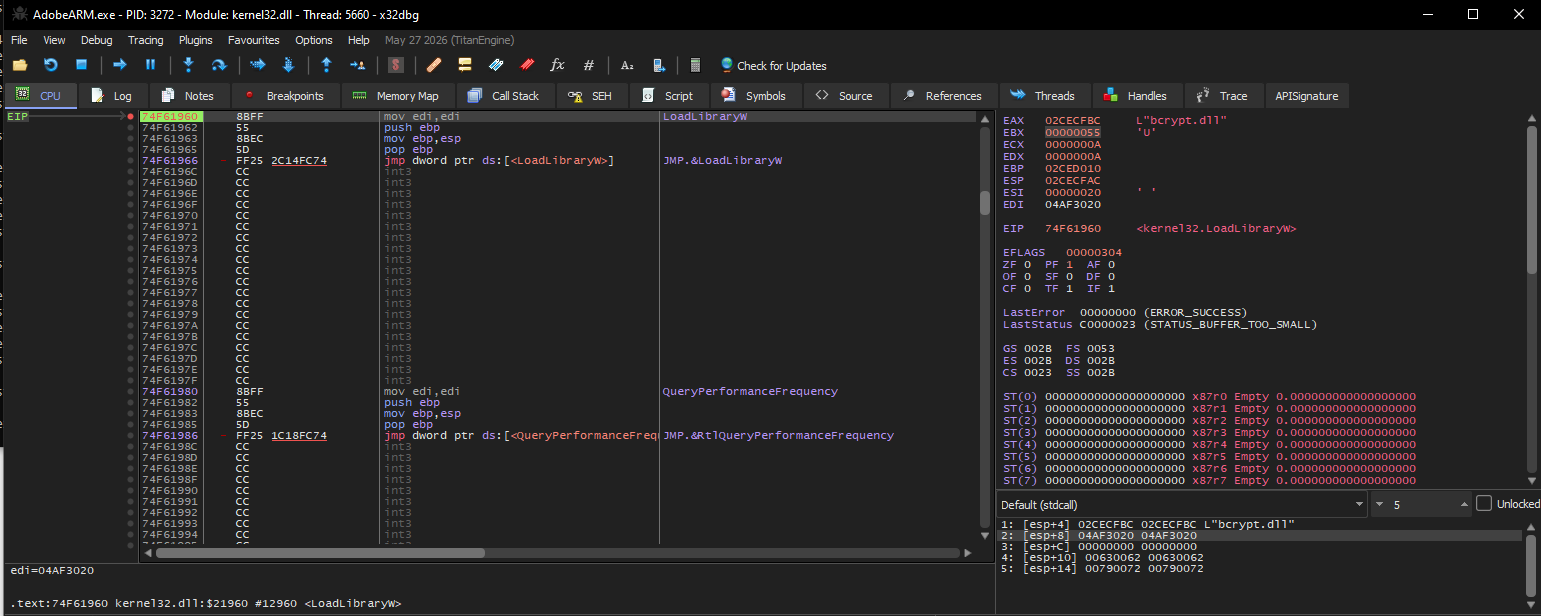
bcrypt.dll being pulled in by name inside the signed host process — the load that comes just before the resource is decrypted:
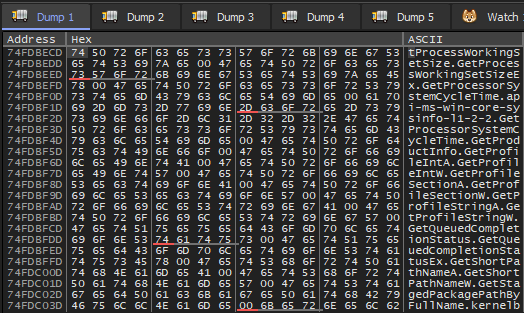
The embedded resource coming apart in the debugger — BCryptDecrypt called on the high-entropy blob, and the decrypted buffer in memory:

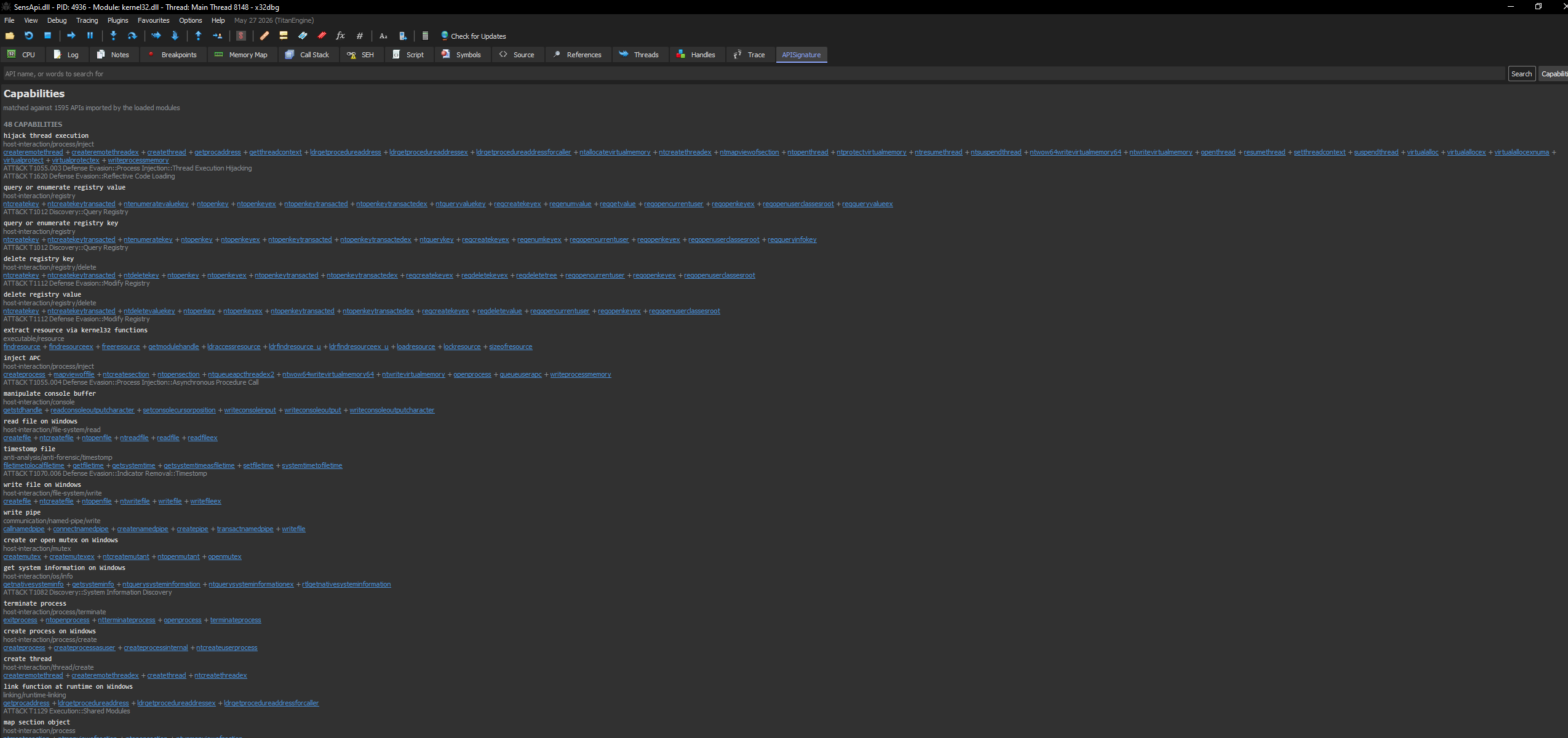
Capabilities flagged at runtime by the API-signature plugin — resource extraction, process creation, mutex, registry, thread and memory operations:
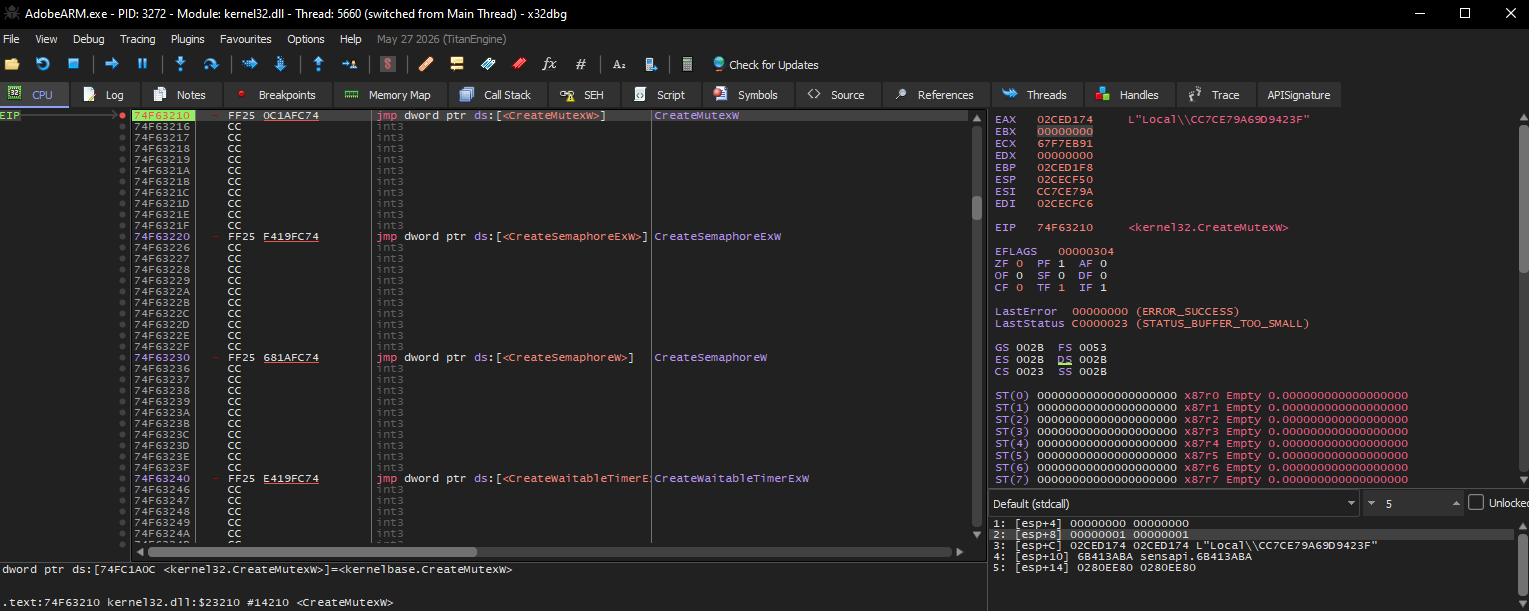
Mutex handling — the rule hit first, then the live CreateMutexW call with the name Local\CC7CE79A6BD9423F:

Registry reconnaissance APIs:

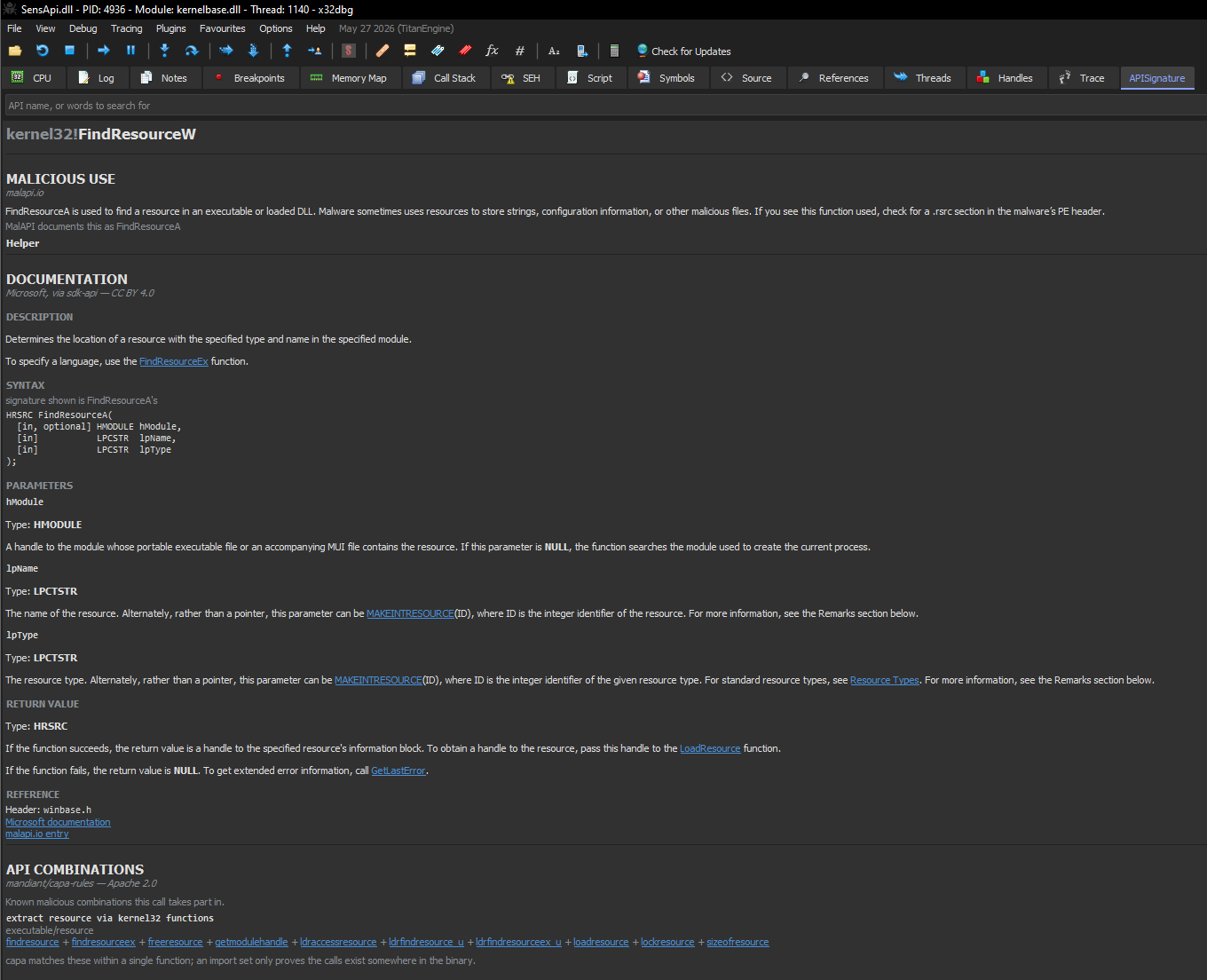
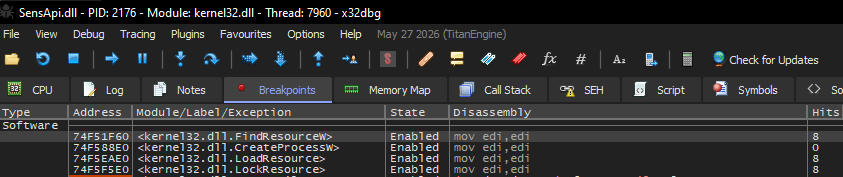
Resource extraction — the FindResourceW signature, the matching rule hit, and the breakpoints firing in the live process:

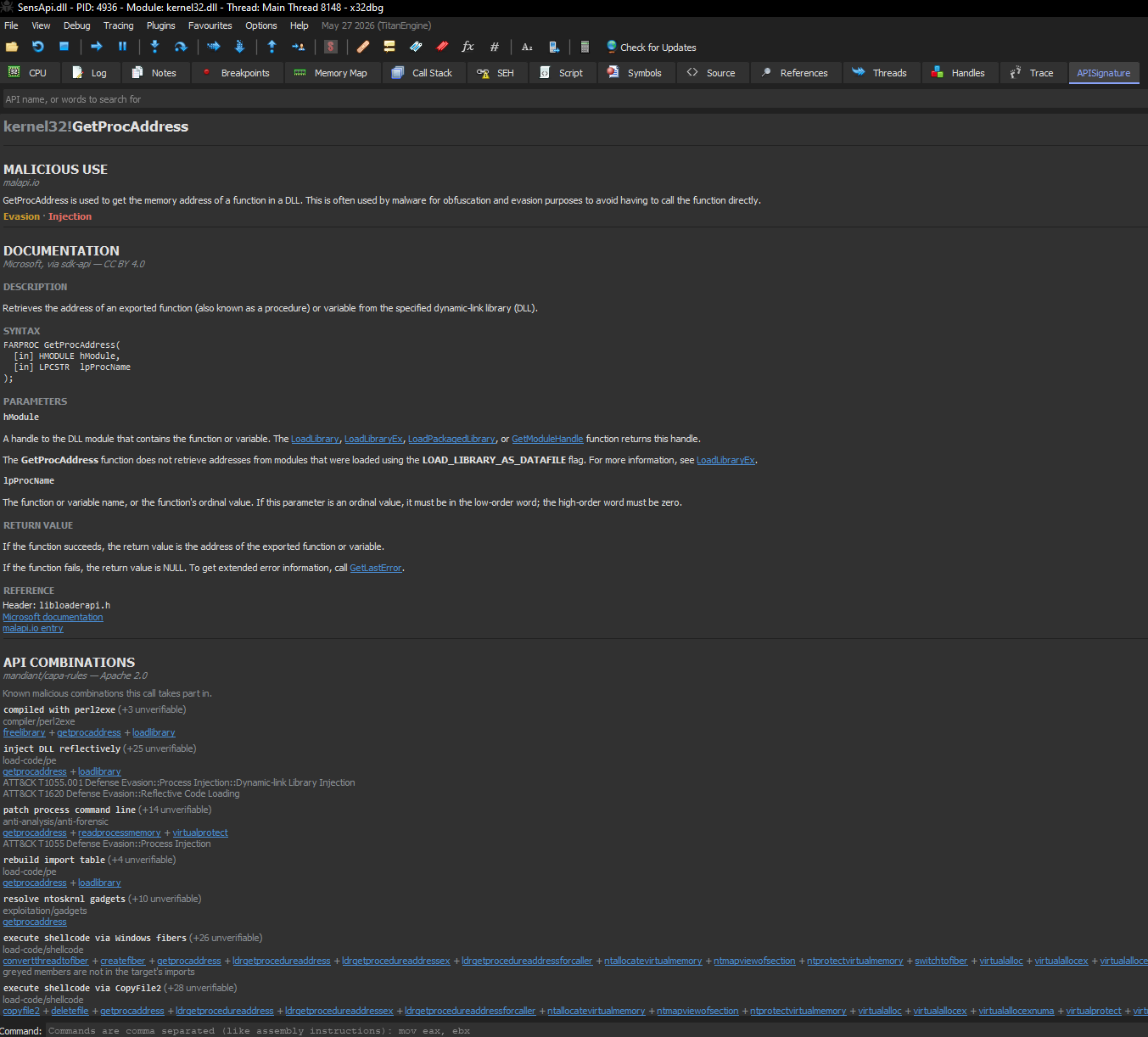
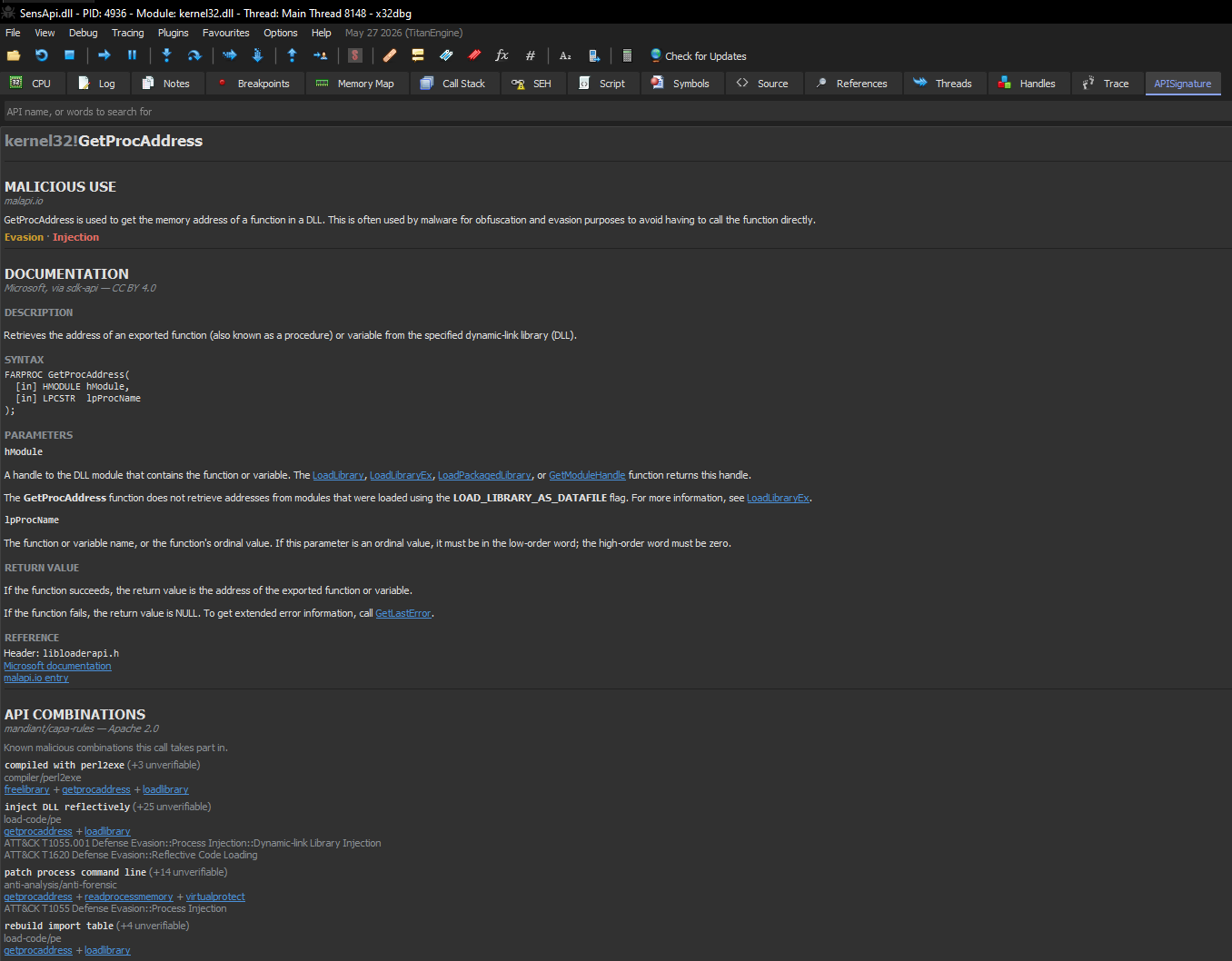
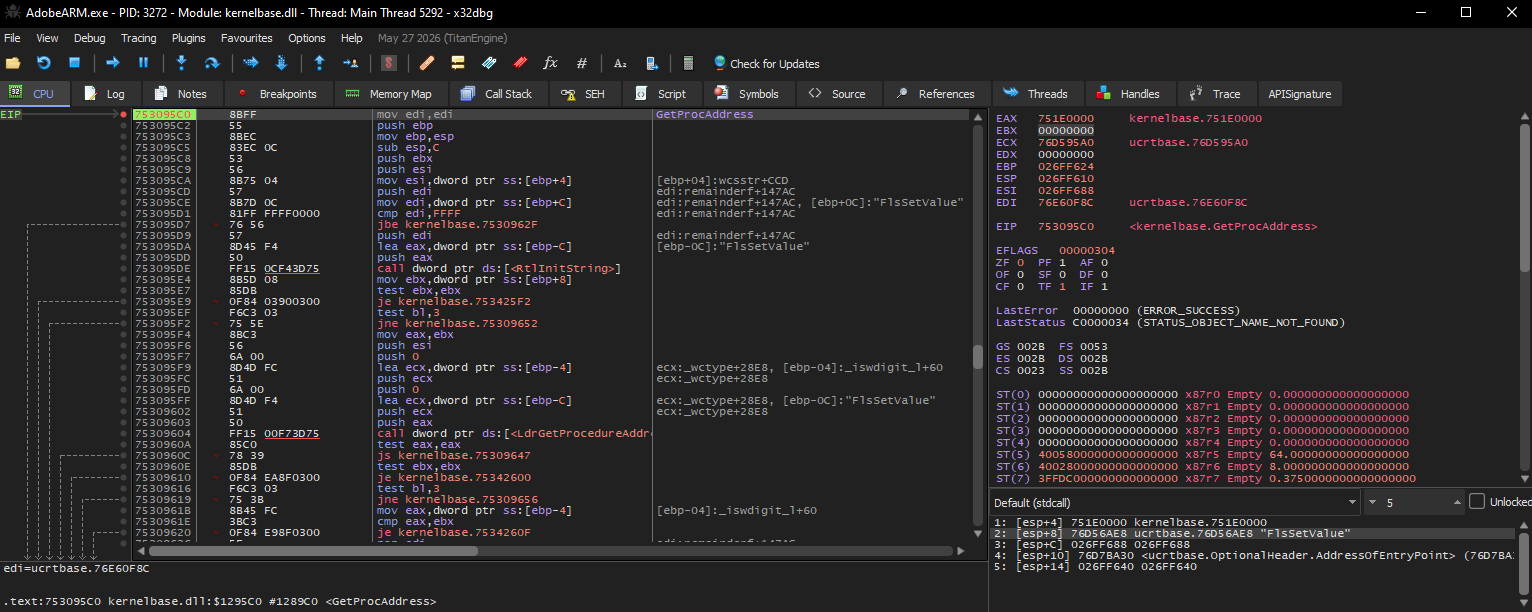
Runtime API resolution through GetProcAddress:
The host process the DLL lands in, with PowerShell as its child:

Threat Intelligence
| Field | Value |
|---|---|
| SHA-256 | 766fe987b73f77d3e4fb5ca07aa5392993451d3cefdda293ba92443e1a6f268a |
| MD5 | 7b5b6bc88ae1886d6e228d1d48e5cc72 |
| Type | PE32 DLL (GUI), 32-bit, MSVC 2022 (v17.6) |
| Masquerade | Claims “SENS Connectivity API DLL”, “© Microsoft Corporation”, 10.0.19041.1 — but unsigned and not a real Microsoft binary |
| Exports | IsDestinationReachableA, IsDestinationReachableW, IsNetworkAlive |
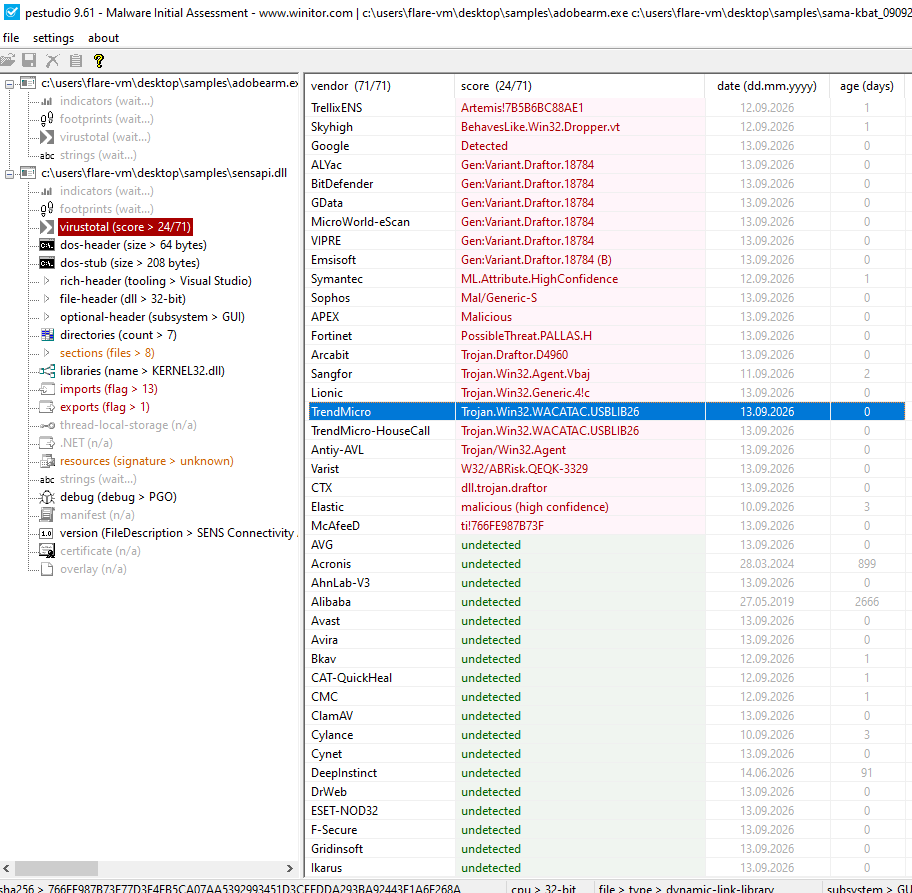
| Detections | 21 / 71 malicious |
| Suggested label | trojan.draftor/abrisk |
Pestudio’s VirusTotal view for the copy we analysed — 32-bit DLL, SENS Connectivity version metadata, no certificate:
What the intelligence sources confirm about this file:
- Masquerading (T1036) by name and metadata, plus DLL side-loading (T1574) as its execution method. Two separate Sigma rules — “Potential System DLL Sideloading From Non System Locations” and “Unsigned DLL Loaded by RunDLL32/RegSvr32” — fired on this exact hash when it was loaded from a
\Temp\path. - The
.rsrcsection is roughly 2 MB of high-entropyRT_RCDATA(entropy ≈ 8.0), which is where the encrypted payload/config is carried; a non-standard.fptablesection was flagged as packing. capareports Base64 + XOR + ADD/XOR/SUB custom encoding, runtime API resolution viaGetProcAddress, PE-header parsing / section enumeration (self-unpacking / reflective-load behaviour), mutex handling, file read/write/copy, and environment/privilege queries.- In a standalone detonation (renamed
init.dll, run viarundll32 …,#1) the DLL read its own image, resolved APIs from unbacked memory, and then crashed under WerFault — i.e. it is built to run as part of the full chain, not on its own. Its own contacted infrastructure in isolation was limited to a
162.159.36.2:53/UDPCloudflare DNS lookup. The malicious C2 beacon (§ below) appears only in the full-archive detonation, not from this member alone.
3. SAMA-Kbat_0909267uvr09-09.bat — The Multi-Stage Loader
This is the heart of the archive, and where we spent most of our time. It is a 933 KB batch file — and despite the .bat extension, calling it a “batch downloader” would badly undersell it. There is no download. The file is the dropper and the encrypted container for everything it runs.
3.1 Malware Analysis
Sample identity
| Property | Value |
|---|---|
| SHA-256 | 94407c7291a95e6e5e49d54aa998cf034e2fb0d0d5af8778900034decf872d73 |
| MD5 | 43b042834190a2d015e2d6af5efa5b2a |
| Size | 933,110 bytes |
| Type | DOS batch, ASCII, CRLF, 380 lines (up to ~6,000 chars/line) |
| Internal family name | “KARMO” (self-named via KARMO_DEBUG, KARMO_HANDOFF_DETACH, KARMO_PE_* variables) |
The filename on disk is its own SHA-256 — the tell-tale sign of a hash-named sample pulled from a sandbox, USB, or AV quarantine.
How it hides: obfuscation
The batch script is built to be unreadable by a human and unmatchable by a signature. A few techniques do most of the work:
String splicing. Every meaningful string is assembled at runtime from 2-character slices of longer decoy strings. For example
SystemRootis never written literally — it’s stitched together from a junk variable:1 2
set "DSWY=mG6hSystEaQgemF9nXcRSBr3xoo_8Dtglh" set "REIKN=!DSWY:~4,4!!DSWY:~12,2!!DSWY:~19,1!!DSWY:~25,2!!DSWY:~30,1!" -> SystemRoot
- Variable-name indirection. The name of the next variable to read is itself the result of a splice, so you can’t just grep for a variable — you have to resolve the pointer first.
- A
findstrself-read. The script searches its own file for marker lines and executes them, so the payload lines are never reached by normal top-to-bottom flow:for /f … in ('findstr /c:"&rem XVTVLGKQPI" "%~f0"') do %%A. - An inert data section after
exit /b 0. The encrypted module blobs are stored asset "PREFIX<payload>"lines with no=sign, socmd.execan never actually assign them. They exist purely as data for the PowerShell stages to read back by prefix. The batch is padded with 65 junk comment lines and hundreds of decoy variables to bury them.
The most elegant trick is the environment-variable pointer table: the PowerShell loader stages don’t contain the decryption key or even the data — they contain the name of the variable that holds the key, and the name of the variable that holds the data. The batch repoints those two names before each round, and the same tiny loader decodes a completely different stage each time.
The execution chain
Reduced to plain language, the chain runs like this:
- Batch bootstrap resolves the path to
powershell.exe(with a WOW64sysnativefallback) and pulls the first blob out of itself with thefindstrtrick. - PowerShell is launched once and asked to run two script blocks straight from environment variables — nothing touches disk:
1
powershell -NoProfile -Command "&(NewScriptBlock $env:OQQXIIA);&(NewScriptBlock $env:MWBREA)"
- Stage 1 re-reads the batch file, finds its blob, hex-decodes it and subtracts a key (101) to produce a small generic XOR loader.
- Stage 2 is that reusable XOR loader. Guided by the pointer table it decodes, in turn: a guard stub (single-instance mutex + console hiding), a re-spawner that relaunches PowerShell with
CREATE_BREAKAWAY_FROM_JOBto escape sandbox job-objects, and finally the module-extractor. - The module-extractor reads all the embedded blobs, checks each one’s length and SHA-256 against the manifest, and hands control to the orchestrator — all in-process, in the current runspace.
- The BOOT orchestrator scrubs the environment down to a 30-name allow-list (erasing its own breadcrumbs), does an anti-sandbox process sweep, decrypts every module, and runs the host module.
- The host module disables AMSI, rebuilds a custom in-memory .NET assembly with
Reflection.Emit(neverAssembly.Load, so nothing hits disk), and calls into it to launch the native PE loader and payload.
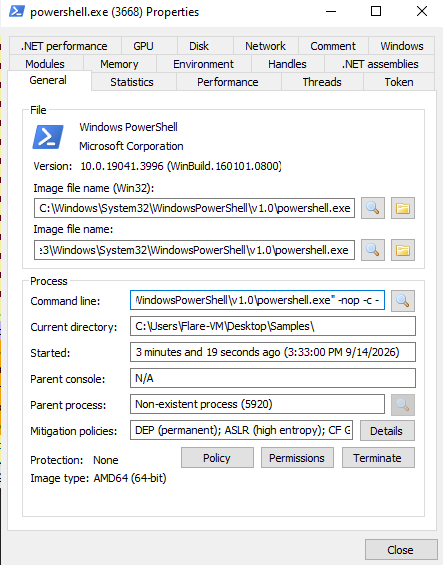
The re-spawned PowerShell — the command line built by the loader’s own CreateProcessW call, and the process as it appears on the host, parent already gone:

The XOR keys and containers we recovered for each round:
| Stage / blob | Encoding | Recovered artifact |
|---|---|---|
XJQSYI | hex + subtract 101 (mod 256) | stage-2 generic XOR loader |
XVTVLGKQPI | hex + XOR 72 | guard stub (mutex / console hide) |
AGQDBGSGN | hex + XOR 140 | CreateProcessW re-spawner |
JUUUNYFMPV | hex + XOR 82 | loader for the final stage |
UYTIYS+OUFGWTCR | hex + XOR 120 | final module-extractor |
FAOEOY | hex + XOR 160 | staging / persistence scripts |
| BOOT | Base64 + XOR 0x16 + GZip | stage-3 orchestrator |
| AMSI | Base64 + XOR 0x16 + GZip | AMSI bypass |
| PS | Base64 + XOR 0x16 + GZip | in-memory .NET engine |
The seven embedded modules
Once the orchestrator runs, seven modules are lifted out of the file, each verified against the manifest:
| Tag | What it is | Notes |
|---|---|---|
| BOOT | stage-3 orchestrator (PowerShell) | env scrub, sandbox sweep, module dispatch |
| AMSI | AMSI bypass | sets AmsiUtils.amsiInitFailed = true |
| PS | in-memory .NET engine | parses a custom HOI1 container and rebuilds an assembly via Reflection.Emit |
| HCS | the managed host assembly (HOI1 blob) | exposes MPHDFG.DVYXYVASXG::Run(...) |
| HBT | native “boot” PE stub | custom 16-letter-alphabet encoding, starts with MZ |
| RSC | native x64 PE loader | Base64 + AES-256-CBC + GZip → 247,808-byte PE |
| PLD | final implant / config blob | 451,904 bytes, entropy 8.0, no PE header |
The AES key material for RSC is itself XOR-obfuscated in the script; recovered, it is:
1
2
AES-256 key : 6dfba53763005cbe3edf462234ffd7f7bd795e348ffe27c69f524b571c0b674c
AES-256 IV  : 63f9d069eba3dd631af5194488f9ebdc
Anti-analysis
The loader is defensive at almost every step:
- Single-instance & handoff: a mutex
Local\SBMSRCXZUYand an eventLocal\SBMSRCXZUYecoordinate the stages. - Console hiding:
FreeConsole+ShowWindow(SW_HIDE)+SetWindowPos(HWND_BOTTOM). - Sandbox process sweep: it kills small instances of
choice,msiexec,SearchProtocolHost,backgroundTaskHost,gpupdate,prevhost,dllhost(the helper processes automated sandboxes spin up), then sleeps 5 seconds. - Job-object escape: re-spawns PowerShell with
CREATE_BREAKAWAY_FROM_JOB | CREATE_NEW_CONSOLEvia a hand-builtCreateProcessWP/Invoke. - AMSI bypass: flips
amsiInitFailedtotrueand nulls the AMSI context/session so script content stops being scanned. - Fileless: every stage is a PowerShell script block or a
Reflection.Emitassembly — nothing malicious is written to disk in a runnable form. - Debugger / VM checks are present in the host module (checks for
IsAttached,Wireshark/procmon/x64dbg/…, and VMware/VirtualBox/QEMU/Xen manufacturer strings) but are gated behind an options flag that is switched off in this build — a compile-time variant setting. Worth knowing they can be turned on in another build.
Persistence
Persistence is the one place the loader does touch disk. It copies itself to a hidden, system-attributed file masquerading as a print-spooler component and installs two persistence mechanisms pointing at a signed LOLBin:
- Drop location:
%LOCALAPPDATA%\Microsoft\Windows\Caches\print_spool_m\print_spool_m.dat(plus a hiddenprint_spool_m_*.cmd“hop” launcher). The file, the copy, and the directory are all set Hidden + System. - Trigger (LOLBin):
conhost.exe --headless -- cmd.exe /c call "<hidden .cmd>"— a signed Windows binary that suppresses the console, so nothing is ever shown on screen. - Persistence #1 — Registry Run key:
HKCU\…\CurrentVersion\RunvalueClrUsageTrim_EATI= theconhost --headless …line. - Persistence #2 — Scheduled task:
\CompatCatalog_CNVK,AtLogOnwith a 3-second delay, Hidden,RunLevel Limited. If the task registers successfully, the Run key is deleted — so the task is the primary mechanism and the Run key is the fallback.
The persistence stage also cleans up prior variants of itself (old startup-folder .cmd/.bin files, a CLSID key, stray .ps1/.vbs droppers), which strongly suggests this malware is designed to be updated in place across campaigns.
Dynamic evidence (full-archive detonation)
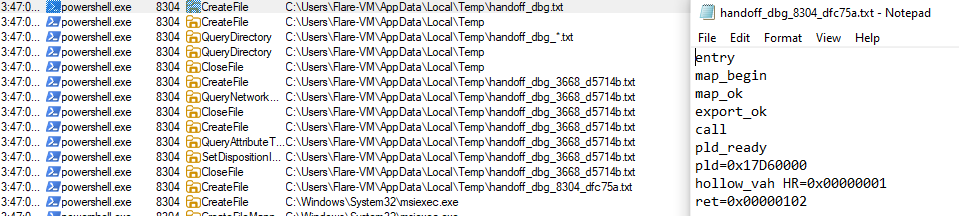
The loader’s own handoff log — pld_ready with the payload mapped at 0x17D60000, then the hollowing step returning HR=0x00000001:
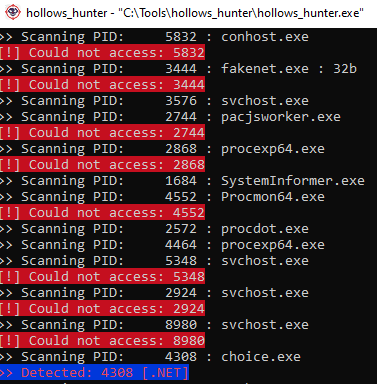
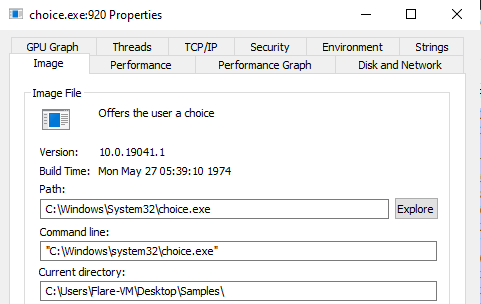
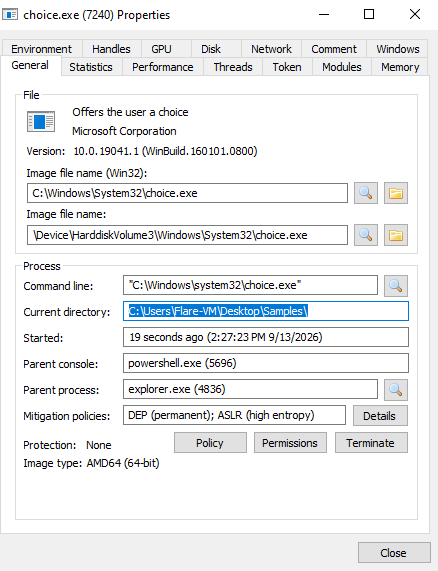
What that step produced — choice.exe detected as a hollowed process, then the same image on the host with a forged build timestamp dated 1974 and no parent of its own:
The whole chain on the host, console host included:

3.2 Threat Intelligence
Where the static pass stops (at the encrypted PLD), the intelligence sources pick up. Because the .bat we analysed is the exact same file that was detonated (SHA-256 94407c7…2d73), we can extend our own findings with what the full-archive sandbox run and crowdsourced signatures reported.
Classification. GTI code-insight (“palm”) verdicts label the loader malicious; suggested label trojan.alien/camelot. Detection is low (5 / 63) because the file is almost entirely obfuscated data — exactly the point of the design.
Final payload (in-memory). The sandbox extracted two 32-bit VB.NET PE images from memory during the run — the actual payload the whole chain exists to deliver:
| Internal name | SHA-256 | Detections | Label |
|---|---|---|---|
SAMA-Kbat.exe | 189c85ade5e3bb132c88f925ef7cddc94d20bcef4fe5a6e6a7af9940b5e419cd | 36/71 | trojan.msil/basic, popular name xworm |
SAMA-K2.exe | fe0e087c1ff8453b14b672158a7bf4d9e8f29d6929bf1feabafa00390d8f104c | 37/71 | trojan.msil/basic, popular name xworm |
Both carry the product name “SAMA” (company falsely “Microsoft”) and the internal branding “SAMAClient101.”
Command & Control. In the full-archive detonation the chain beaconed to:
| Indicator | Detail |
|---|---|
130.94.59.139:7000/TCP | Primary C2. Snort fired “MALWARE-CNC Win.Infostealer.XWorm variant communication.” |
| Hosting | ASN 154177, AS owner LIGHT NODE LIMITED (LightNode VPS), country SA (Saudi Arabia), IP first seen 2026-08-14, VT reputation currently 0/89 (fresh, not yet widely flagged) |
162.159.36.2:53/UDP | Cloudflare public DNS lookup — infrastructure, not malicious |
The beacon as captured on the host — choice.exe (PID 6804) reconnecting to the C2:
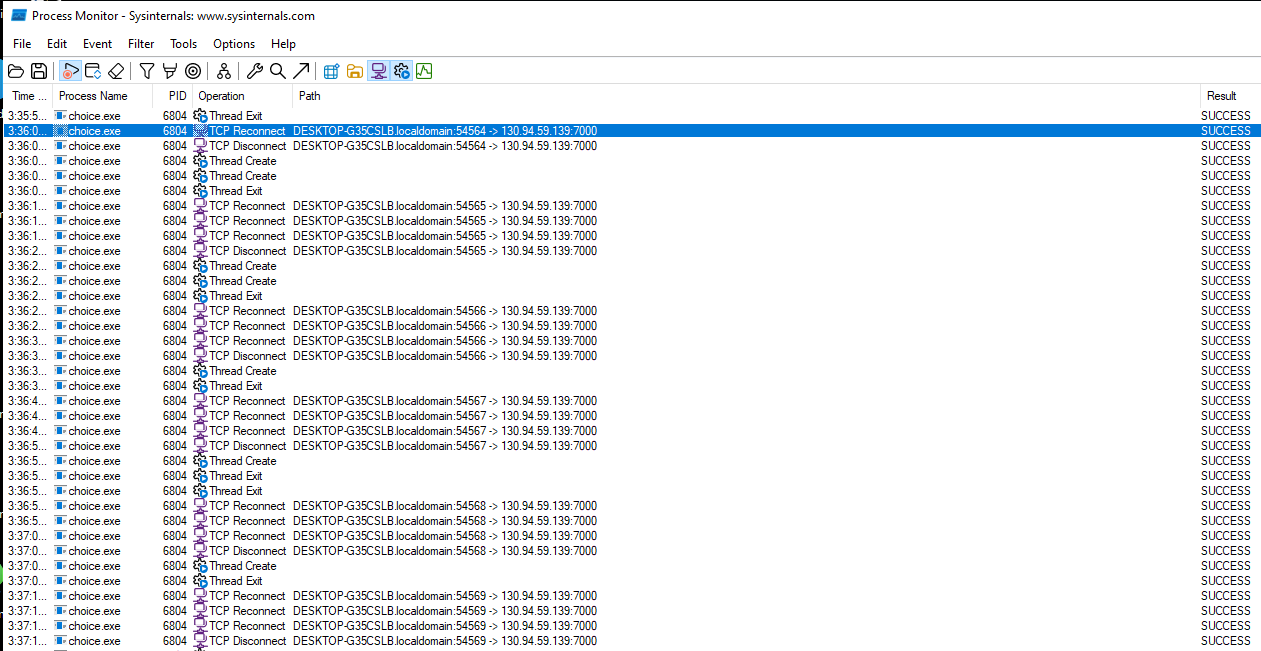
Targeting. The Saudi-hosted C2 combined with the SAMA (Saudi Central Bank) lure branding indicates a campaign aimed at Saudi Arabian targets, most likely through a banking / finance-customer-service pretext (medium-high confidence, inferred from naming + hosting geography).
MITRE ATT&CK Mapping (loader + chain)
| Tactic | Technique | ID | Evidence |
|---|---|---|---|
| Execution | PowerShell | T1059.001 | Script blocks executed from env vars via NewScriptBlock |
| Execution | Windows Command Shell | T1059.003 | .bat loader, findstr self-extraction |
| Execution | Native API | T1106 | CreateProcessW via hand-built P/Invoke |
| Defense Evasion | Hijack Execution Flow: DLL Side-Loading | T1574 | AdobeARM.exe loads fake SensApi.dll |
| Defense Evasion | Masquerading | T1036 | Fake Microsoft DLL; print_spool_m, CompatCatalog_CNVK |
| Defense Evasion | Obfuscated / Encoded Files | T1027, T1027.009, T1027.013 | String splicing, multi-scheme encoding, embedded encrypted modules |
| Defense Evasion | Deobfuscate/Decode Files | T1140 | Runtime hex/XOR/Base64/GZip/AES decoding |
| Defense Evasion | Reflective Code Loading | T1620 | In-memory .NET via Reflection.Emit |
| Defense Evasion | Impair Defenses: Disable Tools | T1562.001 | AMSI bypass (amsiInitFailed) |
| Defense Evasion | Virtualization/Sandbox Evasion | T1497.001 | VM/debugger checks (present, disabled in this build); sandbox process sweep |
| Defense Evasion | Hide Artifacts: Hidden Window / Files | T1564.003, T1564.001 | conhost --headless; Hidden+System files |
| Defense Evasion | Process Injection | T1055 | (dynamic) EXE written to msiexec.exe; RunPE into choice.exe |
| Persistence | Registry Run Keys / Startup Folder | T1547.001 | ClrUsageTrim_EATI |
| Persistence | Scheduled Task/Job | T1053.005 | \CompatCatalog_CNVK |
| Command & Control | Application Layer / Encrypted Channel | T1071, T1573 | (dynamic) TCP beacon; in-memory crypto |
| Defense Evasion | Indicator Removal | T1070.004, T1070.009 | Deletes prior variants and its own env vars |
Detection & IOCs
Host artifacts (high confidence)
1
2
3
4
5
6
7
File:   %LOCALAPPDATA%\Microsoft\Windows\Caches\print_spool_m\print_spool_m.dat
File:   %LOCALAPPDATA%\Microsoft\Windows\Caches\print_spool_m\print_spool_m_*.cmd
Run:    HKCU\Software\Microsoft\Windows\CurrentVersion\Run\ClrUsageTrim_EATI
Task:   \CompatCatalog_CNVK   (AtLogOn, Delay PT3S, Hidden, RunLevel Limited)
Mutex:  Local\SBMSRCXZUY
Event:  Local\SBMSRCXZUYe
Trigger: conhost.exe --headless -- cmd.exe /c call "<…\print_spool_m\*.cmd>"
Network (defanged, dynamic)
1
2
C2   130[.]94[.]59[.]139 : 7000/TCP   (XWorm infostealer C2; AS154177 LightNode; SA)
DNS  162[.]159[.]36[.]2 : 53/UDP       (Cloudflare resolver — benign infrastructure)
File hashes
1
2
3
4
5
6
Archive 6745899253115a295a86554127264a1d76e24f4aa2d6f2879e7284b1538b53ad SAMA.zip
Loader 94407c7291a95e6e5e49d54aa998cf034e2fb0d0d5af8778900034decf872d73 SAMA-Kbat_….bat
Side DLL 766fe987b73f77d3e4fb5ca07aa5392993451d3cefdda293ba92443e1a6f268a SensApi.dll (malicious)
Payload 189c85ade5e3bb132c88f925ef7cddc94d20bcef4fe5a6e6a7af9940b5e419cd SAMA-Kbat.exe (in-mem)
Payload fe0e087c1ff8453b14b672158a7bf4d9e8f29d6929bf1feabafa00390d8f104c SAMA-K2.exe (in-mem)
(clean) 69469a3b807d8751966a3d6cd78f17c8b368a6760718805997e751e3ab2b3eed AdobeARM.exe — DO NOT BLOCK
Sigma — headless conhost launching a cached CMD
1
2
3
4
5
6
7
8
9
10
11
12
13
14
15
title: Conhost Headless Launching Cached CMD (SAMA/KARMO persistence)
status: experimental
tags: [attack.persistence, attack.t1547.001, attack.defense_evasion, attack.t1564.003]
logsource: {category: process_creation, product: windows}
detection:
  selection:
    CommandLine|contains|all:
      - 'conhost'
      - '--headless'
    CommandLine|contains:
      - '\Microsoft\Windows\Caches\'
      - '.cmd'
  condition: selection
falsepositives: [Low]
level: high
Sigma — batch self-extraction + env-var script-block PowerShell
1
2
3
4
5
6
7
8
9
10
11
12
13
14
15
16
title: PowerShell Script Block Executed From Environment Variables (SAMA/KARMO loader)
status: experimental
tags: [attack.execution, attack.t1059.001, attack.t1027]
logsource: {category: process_creation, product: windows}
detection:
  selection_ps:
    Image|endswith: '\powershell.exe'
    CommandLine|contains|all:
      - 'NewScriptBlock'
      - '$env:'
  selection_findstr:
    Image|endswith: '\findstr.exe'
    CommandLine|contains: '&rem '
  condition: selection_ps or selection_findstr
falsepositives: [Some packers/installers use env-var script blocks — validate the parent .bat]
level: high
Closing
SAMA.zip is a tidy example of how commodity crimeware layers trust and obfuscation to get a fileless RAT running on a target. A signed Adobe binary provides cover, a fake system DLL rides in behind it, and a 933 KB batch file quietly reassembles, verifies, and executes seven encrypted modules entirely in memory before injecting an XWorm-family stealer and beaconing to fresh Saudi-hosted infrastructure. The lure and the hosting both point squarely at Saudi users.